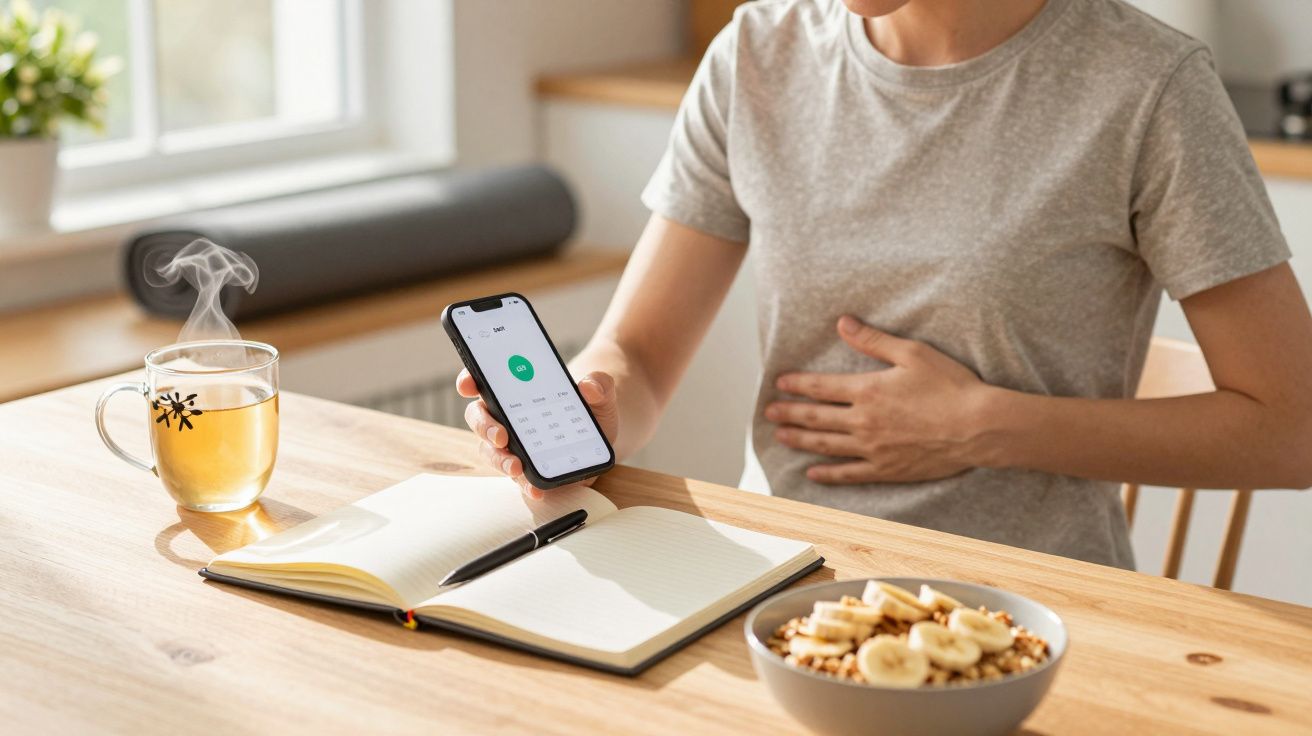
Millions of people live with gut pain, bloating, and unpredictable bathroom trips, yet many never find a treatment that truly feels right.
Now a major analysis suggests that talk therapy and guided self-help may ease irritable bowel syndrome without relying on medication alone.
What Irritable Bowel Syndrome Really Is
Irritable bowel syndrome (IBS) describes a group of chronic digestive symptoms rather than a single, clear-cut disease. People experience recurring abdominal pain, bloating, and changes in bowel habits such as diarrhea, constipation, or alternating between the two. Doctors diagnose IBS when tests rule out other conditions but symptoms continue for months.
IBS affects an estimated 10% to 15% of people worldwide, based on pooled international research published between 2006 and 2024. Women experience it about twice as often as men, and many patients report that symptoms disrupt work, travel, social life, and sleep.
Unlike inflammatory bowel disease or cancer, IBS does not damage the bowel or shorten life expectancy. Even so, it can take a heavy toll on daily life because the pain and urgency may feel unpredictable and embarrassing. Many patients cycle through one medication after another, hoping for partial relief.
IBS is a long-term condition with no current cure, but symptoms can shift dramatically when the brain–gut connection changes.
The Mystery of the Brain–Gut Axis
Researchers no longer view IBS as “all in your head” or “only in your gut.” Instead, many describe it as a disorder of the brain–gut axis-the network of nerve signals and chemical messages linking the digestive system and the central nervous system.
When that communication gets off track, the gut may react strongly to normal events like eating or mild stretching of the bowel. Nerve endings in the intestines can become hypersensitive. The brain may also interpret signals from the gut as more dangerous or painful than they really are.
Stress, lack of sleep, traumatic events, infections, changes in the gut microbiome, hormones, and diet can all affect this axis. Not everyone with IBS has the same triggers, which helps explain why one person improves with dietary changes while another does better with stress management or therapy.
Rather than asking whether IBS is “psychological” or “physical,” many scientists now see it as both-linked by a malfunctioning feedback loop between gut and brain.
A Large Study Tests Mind–Body Therapies
To understand how psychological therapies might help this feedback loop, a U.S. research team combined data from 67 clinical trials involving more than 7,400 people with IBS. The analysis was published in The Lancet Gastroenterology & Hepatology in October 2025.
The trials compared different behavioral therapies with standard care, medication-based approaches, or waiting-list controls. Instead of focusing on small score changes, the team used a clear outcome: whether a person reported overall improvement in IBS symptoms-yes or no.
Researchers then used a statistical approach that allowed comparisons across different treatments, not just against control groups. Each therapy received:
- A relative risk of failure (how likely it was to leave symptoms unchanged compared with control)
- A P-score (from 0 to 1) reflecting how likely it was to rank among the most effective options when all treatments were compared
The Most Promising Non-Drug Therapies
Three approaches came out ahead across this network of trials:
- Minimal-contact cognitive behavioral therapy (CBT): relative risk of failure 0.55, P-score 0.78
- Telephone self-management programs: relative risk of failure 0.57, P-score 0.75
- Dynamic psychotherapy: relative risk of failure 0.59, P-score 0.72
A relative risk below 1 means fewer people failed to improve compared with control groups. The P-score reflects the likelihood that a therapy ranks near the top when all treatments are compared together.
Brief CBT, remote coaching, and depth-oriented therapy all seemed to give many patients a better chance of real symptom relief than usual care alone.
How Cognitive Behavioral Therapy May Calm the Gut
CBT does not claim to “fix” the intestines directly. Instead, it targets thoughts, emotions, and behaviors that affect how the brain processes gut signals. For IBS, therapy often focuses on:
- Reducing catastrophic thinking about pain, bloating, and bathroom access
- Managing anxiety that builds before meals, travel, or social events
- Changing habits that keep the body on high alert, such as constant body scanning or checking
- Improving sleep routines and relaxation skills to reduce stress-related flares
Minimal-contact CBT typically combines a structured workbook or digital program with a few short check-ins by phone or video. This approach lowers time and cost while still providing support. For many people, learning that pain signals can be turned down-like a volume knob-can shift their sense of control.
Why Phone Self-Management Matters
Telephone self-management programs typically teach people how to track symptoms, adjust diet carefully, manage stress, and stick with gradual habit changes. A nurse, dietitian, or therapist calls at set intervals to review progress and help solve problems.
For patients who feel too exhausted, busy, or embarrassed to attend frequent office visits, this model can feel more realistic. It can also reach rural communities and people without easy access to specialty centers.
Dynamic Psychotherapy and Deeper Patterns
Dynamic psychotherapy examines long-standing emotional patterns, such as difficulty expressing anger, fear of disapproval, or unresolved grief. These patterns can affect stress levels and physical tension, including tension in the gut.
Some people notice that flares track closely with relationships, conflict, or memories. In those cases, working through emotional issues may reduce both psychological and physical distress.
How These Options Compare With Usual Care
IBS care often relies on a mix of:
- Antispasmodic drugs to relax bowel muscles
- Laxatives or anti-diarrheal medications to address stool changes
- Dietary changes, such as fiber adjustments or low-FODMAP plans
- Occasional low-dose antidepressants to help modulate pain
Many people still report only partial relief. The new analysis does not suggest stopping medication entirely. Instead, it supports combination strategies, where behavioral therapies address the brain–gut axis while medications and diet target more direct triggers.
For some patients, adding a structured mind–body program may shift IBS from overwhelming to manageable, even after previous treatments have fallen short.
Limits of the Evidence and What It Means in Real Life
The authors noted important gaps in the data. Many trials were small. Some only reported short-term outcomes. Publication bias likely favored positive results, and several studies had a meaningful risk of bias due to design or reporting choices.
IBS also varies widely from person to person. A therapy that transforms one patient may do little for another. Access remains uneven as well: CBT providers trained in IBS are scarce in some areas, and insurance coverage for talk therapy related to digestive symptoms is not universal.
Even with these limitations, the overall pattern across dozens of trials points in a consistent direction: structured psychological support aimed at the brain–gut axis can reduce symptom burden for many people.
Practical Questions Patients Often Ask
| Question | Typical answer from specialists |
|---|---|
| Does therapy mean my IBS is “just stress”? | No. IBS involves real physical processes. Stress and perception can amplify signals, and therapy helps recalibrate that loop. |
| How long does CBT for IBS usually last? | Programs commonly run 6 to 10 sessions-sometimes fewer in minimal-contact formats-plus at-home exercises. |
| Will I have to stop my medications? | Most patients keep their current medications at first. Any changes are usually gradual and supervised by a clinician. |
| Can I manage IBS fully from home? | Some people do well with remote support, online modules, relaxation training, and diet changes guided by a clinician. |
Beyond Therapy: Building a Broader IBS Toolkit
Psychological approaches can be combined with other non-drug strategies that also influence the brain–gut axis. Breathing exercises, mindfulness, gentle yoga, paced walking, and consistent sleep routines can lower nervous system arousal. A calmer baseline may reduce the chance that normal gut activity triggers pain.
Working with a dietitian can help identify whether certain foods, meal sizes, or timing contribute to symptoms-without sliding into overly restrictive eating. For some people, a structured short-term plan such as a low-FODMAP diet, followed by careful reintroduction, can clarify personal tolerances and build confidence around food.
People who keep a simple symptom diary often spot patterns that once seemed random: flares before deadlines, pain after skipping breakfast, or worse bloating during certain phases of the menstrual cycle. Those insights can help tailor therapy goals and lifestyle choices.
What This Could Change for Future Care
This analysis strengthens the case for integrating behavioral care into standard IBS treatment, rather than reserving it as a last option. Hospitals and clinics may invest more in brief CBT protocols, group sessions, app-based programs, and telephone coaching that can reach larger populations.
Researchers are also studying which patients benefit most from each approach. Someone with high anxiety about symptoms may respond best to CBT, while someone with long-standing interpersonal trauma may benefit more from dynamic psychotherapy. In the future, biomarkers such as heart rate variability, stool microbiome profiles, or brain imaging patterns could help guide these choices.
For people living with IBS today, the message is not that symptoms are imaginary-it is that the nervous system can learn. The gut may remain sensitive, but when the brain–gut axis finds a steadier rhythm, pain and urgency often loosen their grip.





Comments
No comments yet. Be the first to comment!
Leave a Comment