Sun out, toes out-and suddenly your favorite sandals look strangely tired.
The culprit is hiding right under your feet.
As temperatures rise, sandals jump back into rotation, following you from the office to the beach bar. After a few hot days, though, dark marks creep across the insole, and those once-fresh shoes start to look slightly embarrassing.
Why Sandals Stain So Fast
Open shoes feel light and airy, but that design works against them when it comes to hygiene. Every step leaves a trace. Sweat, dust from sidewalks, residue from sunscreen, and body lotion sink deep into the insole. On light-colored sandals, the contrast becomes obvious in a matter of days-not weeks.
Those dark “footprints” aren’t just cosmetic. They combine sweat, bacteria, dead skin, and product buildup, then settle into the material.
On leather soles, the marks often show up as distinct brown or gray shapes, mirroring toes and the ball of the foot. On fabric or cork, they appear more blurred, but the feel changes: the surface becomes sticky, rough, or slightly greasy.
That grime doesn’t just ruin the look. It can trigger odors, irritate skin, and shorten the life of the shoe. The good news: you usually don’t need expensive specialty cleaners. A simple, consistent routine removes most stains and keeps sandals wearable for several summers.
The Simple Cleaning Trick That Resets Your Sandals
Before scrubbing, you need to know what you’re dealing with. Different insoles react differently to water, soap, and brushing.
- Leather insoles: common on dressy sandals and many branded comfort styles.
- Fabric or textile insoles: found on sporty, casual, or espadrille-style sandals.
- Cork or synthetic foam: popular on ergonomic footbeds and beach pairs.
How to Clean Leather Soles Without Ruining Them
Leather hates extremes: too much water warps it; harsh products strip its finish. A gentle but consistent routine works best.
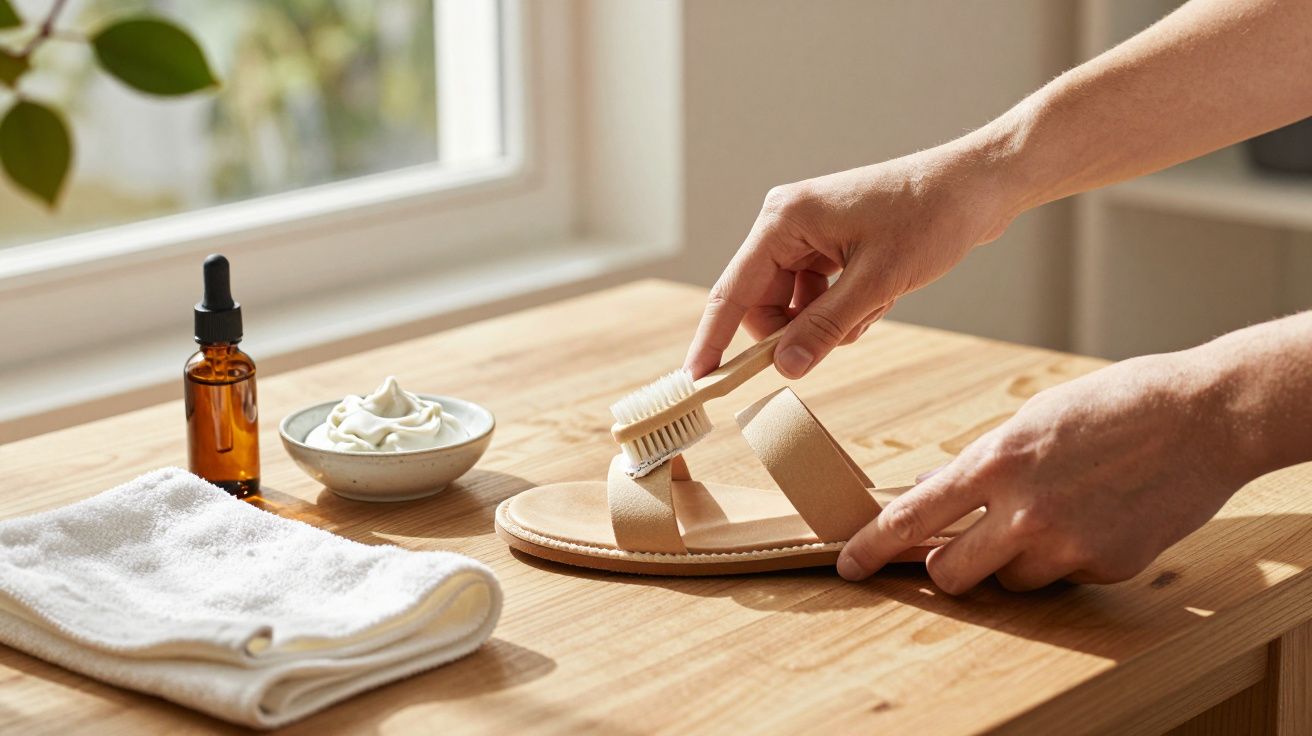
Start by removing surface dust. Take a soft brush-a clean shoe brush or an old, very soft toothbrush works-and sweep over the insole. Use small circular motions, especially where the dark marks are most visible.
Next, mix a mild cleaning solution. Use lukewarm water with a few drops of gentle soap, such as fragrance-free hand soap or a pH-balanced detergent. Avoid dish soap with strong degreasers, which can dry out leather.
A damp, soapy cloth should glide over the leather, not soak it. If the insole looks wet, you’ve used too much water.
Dip a clean cloth into the solution, wring it out well, then wipe the insole-again focusing on the footprint zones. Work slowly; several gentle passes clean better than one aggressive scrub. You should see some of the gray film transferring onto the cloth.
Once the marks fade, wipe the sole again with another cloth lightly dampened with plain water to remove soap residue. Immediately blot with a dry towel to pull out remaining moisture.
Then comes the part many people get wrong: drying. Don’t leave your sandals in full sun on a balcony or next to a radiator. Direct heat hardens leather, causing cracks and sometimes warping the sole.
Instead, let them dry in a shaded, well-ventilated space. If the insole still feels slightly tacky after a few hours, leave them overnight. For very dry leather, a tiny amount of leather conditioner on the insole, buffed well, helps restore flexibility and comfort.
Cleaning Fabric or Textile Insoles Properly
Fabric insoles absorb sweat more deeply than leather, so they often hold onto odors. At the same time, they can deform if you soak them.
Start again with a soft brush to lift dry dirt and dust. Pay attention to the edges where grime builds up unnoticed. Then mix another mild soapy solution with lukewarm water.
Use a cloth or soft brush dipped in the solution to gently work the stained areas. Short strokes in different directions help soap reach the fibers. If the marks stay stubborn, dab-rather than rub-a bit more solution and let it sit for a couple of minutes before wiping.
Rinse fabric insoles with a cloth dampened in clean water, never under a running tap, to avoid soaking the glue and structure of the sandal.
Once rinsed, press a towel against the insole to absorb as much moisture as possible. Dry the pair away from direct sunlight, ideally on a rack where air can circulate underneath. Cloth dries slower than leather, so allow enough time before wearing them again.
What About Cork and Synthetic Footbeds?
Cork and synthetic foam may look more forgiving, but they need care too. For cork, use a slightly stiffer brush and the same mild soap solution. Move in circles over the darkened areas, then wipe with a damp cloth and let the shoes dry in the shade.
For synthetic foam, most manufacturers recommend gentle soap and water as well. Harsh chemicals or alcohol-based sprays can weaken the material over time, even if they seem to clean faster.
Cleaning as a Comfort Upgrade, Not Just a Beauty Hack
Fresh-looking sandals feel different on your feet. When sweat and dirt build up, friction increases and the insole heats up faster. That combination can trigger blisters, redness, and sharp itching by the afternoon.
Regular cleaning smooths the surface and limits bacteria and fungi-two key players in foot odor and some infections like athlete’s foot.
A clean insole reduces odor, keeps skin calmer, and often extends how long you can wear a pair without discomfort.
Dermatologists often see spikes in summer foot issues, partly due to dirty, warm, constant contact with shoes. Even open sandals can trap enough moisture to cause problems when neglected.
Simple Habits to Keep Your Sandals Fresher for Longer
A few quick tweaks to your daily routine can delay those dark marks and make deep cleaning less frequent:
- Wash and dry your feet before putting sandals on, especially in the morning.
- Avoid heavy, oily creams on the soles of your feet when you plan to walk a lot.
- Use a light, fast-absorbing moisturizer at night instead of right before going out.
- Rotate between at least two pairs of sandals so each can air out between wears.
- Sprinkle a small amount of talc-free foot powder on the insole if you tend to sweat.
- Give sandals a quick wipe-down every few wears, not only when stains look obvious.
How Often Should You Clean Your Sandals?
The right frequency depends on how much you walk, the climate, and how much you sweat. As a rough guide, many podiatrists suggest a light clean every week during peak summer and a deeper session every couple of weeks for heavily used pairs.
| Usage level | Recommended light clean | Deeper insole clean |
|---|---|---|
| Occasional wear (1–2 days/week) | Every 2–3 weeks | Once a month |
| Regular wear (3–4 days/week) | Weekly | Every 2 weeks |
| Daily wear in hot weather | Every 2–3 days | Weekly |
If a “clean” pair starts to smell after just one afternoon, your insoles are signaling that they need a more thorough wash-or even replacement, if possible. Some brands sell replacement footbeds; swapping them can extend the life of otherwise solid sandals.
When Stains Signal a Deeper Problem
Not all marks come from ordinary wear. Darker, patchy stains that appear quickly on several pairs, or constant dampness in the insole, may point to excessive sweating or a skin condition.
Hyperhidrosis-a medical term for heavy sweating-often goes unnoticed on the feet. It can leave sandals soaked by midday and create a perfect environment for fungus. In that case, cleaning the shoes helps, but you may also need antiperspirant products made for feet or medical advice.
Persistent scaling, redness between the toes, and strong odors can signal fungal infections. Wearing freshly cleaned sandals with dry feet, changing socks when you do wear them, and avoiding sharing shoes can help limit spread within a household.
Going Beyond Sandals: A Small Care Routine for All Summer Shoes
The same logic applies to sneakers, espadrilles, and slip-ons. Any shoe worn without socks will pick up sweat directly from your skin. Building a quick weekly ritual-brushing insoles, airing shoes overnight, and giving one pair a deeper clean-can dramatically reduce odor and wear.
Some people even schedule a short “shoe reset” every Sunday evening: checking soles for wear, wiping straps or laces, and planning which pairs to rotate for the coming week. That small routine saves money over time and keeps feet healthier.
Think of sandal care less as a chore and more as part of summer self-care. Clean insoles, cooler skin, fewer blisters, and shoes that still look presentable at the end of August-these are modest but very real benefits from a bowl of soapy water, a soft brush, and a bit of shade.





Comments
No comments yet. Be the first to comment!
Leave a Comment