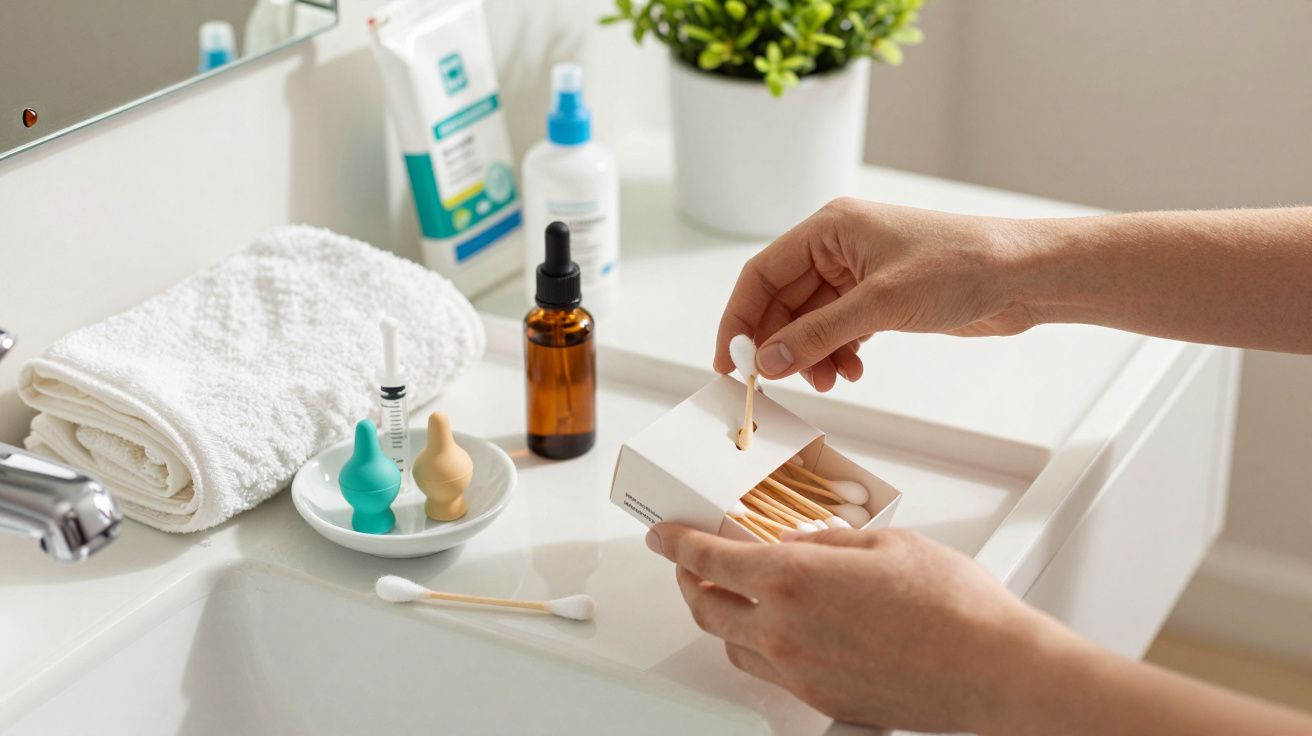
They sit on every bathroom shelf, reach into every tiny corner, and yet their real purpose is badly misunderstood.
For decades, cotton swabs have been sold as the go-to “solution” for earwax, even though doctors keep warning against it. Behind this everyday object is a different story: a risky habit, a misunderstood body function, and a surprisingly practical original use that has nothing to do with ears.
Why doctors say cotton swabs and ears do not mix
Most people push a cotton swab into the ear canal thinking they’re removing wax. In reality, they’re usually doing the exact opposite.
Cotton swabs tend to push earwax deeper into the canal, packing it against the eardrum and creating hard plugs.
Earwax, or cerumen, is produced naturally in the outer part of the ear canal. It traps dust, repels water, and contains substances that slow the growth of bacteria and fungi. The ear then slowly moves this wax outward on its own-like a tiny conveyor belt powered by jaw movement when you talk, chew, and yawn.
When a cotton swab goes in too far, it bypasses that safe outer zone. The wax is compressed instead of removed. Over time, this compacted wax can harden and block the canal.
The real danger: more than just a wax plug
Doctors and pharmacists describe three main risks linked to putting cotton swabs inside the ear:
- Wax impaction: packed wax that blocks hearing and causes discomfort.
- Micro-injuries: tiny scratches in the delicate skin of the ear canal.
- Eardrum damage: in serious cases, a perforated eardrum after a sudden movement.
Those micro-injuries matter. Once the protective wax barrier is disturbed, the skin becomes more exposed to bacteria and moisture. That can set the stage for painful outer ear infections, often called “swimmer’s ear.”
When you remove too much wax, you also remove part of the ear’s natural defense system.
Perforated eardrums are rarer but dramatic. A swab pushed in during a sudden movement-a child bumping into you, a slipped hand, a reflex jerk-can tear the eardrum. The result may be pain, bleeding, buzzing sounds, and temporary or sometimes lasting hearing loss.
So how should you clean your ears safely?
The short answer from specialists is blunt: you usually don’t need to.
The ear canal is self-cleaning. As old wax and skin cells migrate outward, they usually flake off or can be wiped away gently. Interfering too much tends to create the problems people think they’re preventing.
What you can safely do at home
Doctors generally recommend a minimalist routine:
- During a shower, let lukewarm water run gently over the outer ear.
- Use your finger and a soft towel to dry only the visible outer parts.
- If a bit of wax is visible at the entrance to the canal, wipe it away-without inserting anything inside.
Some specialists accept very careful use of cotton swabs only at the entrance to the ear canal-just a few millimeters-to remove excess wax caught in the hairs. The stick should never disappear inside the canal. If you can’t see the cotton in the mirror, you’re going too far.
“Nothing smaller than your elbow should go into your ear canal,” many ENT doctors say, half-jokingly.
People who tend to produce a lot of wax, wear hearing aids, or use earplugs regularly may need medical help from time to time. In those cases, an ENT specialist or trained nurse can remove wax safely using instruments, suction, or gentle irrigation.
The forgotten origin of cotton swabs
Cotton swabs feel like a bathroom product, but their story started elsewhere. In the early 1920s, an American businessman watched his wife wrap cotton around the end of a toothpick so she could clean small, hard-to-reach spaces. He saw a product idea and turned those homemade tools into ready-made “cotton-tipped sticks.”
These “cotton swabs” were not marketed specifically for ears at first. They were all about precision: cleaning tiny gaps, delicate surfaces, and awkward corners.
The first cotton swabs were household helpers for tight spots, not medical instruments for ears.
Only later did the bathroom association grow, helped by suggestive images and habits passed down through families. Yet major manufacturers today explicitly state that their products are not intended for use inside the ear canal.
What cotton swabs are actually good at
Far from being useless, cotton swabs excel at a range of tasks-as long as you keep them out of your ears.
In the bathroom, but not for ears
They’re still handy near the mirror, just for different reasons:
- Fixing makeup mistakes, like smudged eyeliner or mascara
- Cleaning the edges of nail polish for a sharper manicure
- Applying spot treatments to blemishes with precision
Used with a light touch, a cotton swab can save a rushed morning routine without risking your hearing.
Unexpected household uses
Away from the sink, their original mission makes more sense. Cotton swabs can reach where sponges and cloths can’t.
| Area | Use for cotton swabs |
|---|---|
| Electronics | Clean between keyboard keys, around phone buttons, or along laptop vents (always powered off). |
| Car interior | Clear dust from air vents, around dashboard controls, and tight seams. |
| Home appliances | Reach corners of window tracks, faucet bases, or seams on kitchen gadgets. |
| Hobbies | Apply glue or paint in small craft projects or model building. |
Used dry, they pick up dust from tight corners; slightly damp, they can remove grime from textured surfaces.
When earwax really becomes a problem
For some people, leaving ears alone feels alarming-especially if they already struggle with a blocked sensation or reduced hearing. In these situations, understanding what’s normal helps.
Symptoms of a wax plug include a feeling of fullness, muffled sounds, occasional ringing, and sometimes mild pain. People who wear earbuds for many hours or use hearing aids may notice these signs more often, because the devices interfere with the ear’s natural cleaning process.
If you repeatedly feel your ears are blocked, repeated self-cleaning with cotton swabs often makes the cycle worse.
Pharmacies sell softening drops that help wax move out more easily, but even with these, inserting objects into the ear canal remains a bad idea. Persistent problems or pain require a professional exam-not more cotton.
Small changes that prevent bigger health issues
Changing habits around such a trivial object can feel strange. Many people remember parents or grandparents cleaning their ears with cotton swabs in childhood, so the gesture can feel almost comforting.
One way to break the pattern is to repurpose the swabs intentionally. Keep them in a drawer with cleaning products instead of next to cotton pads and shower gel. Reach for them when your keyboard looks dirty or your nail polish has strayed onto your skin-not when your ear itches.
For parents, resisting the urge to “polish” a child’s ears sends a useful message early on: the body often handles basic maintenance by itself. A warm washcloth around the outer ear does the job without risk.
The small annoyance of leaving a bit of wax where it belongs is a modest trade-off against the very real chance of infections, blocked hearing, or an injured eardrum. And once you start seeing cotton swabs as precision cleaning tools for objects rather than for your body, their original purpose suddenly makes a lot more sense.






Comments
No comments yet. Be the first to comment!
Leave a Comment