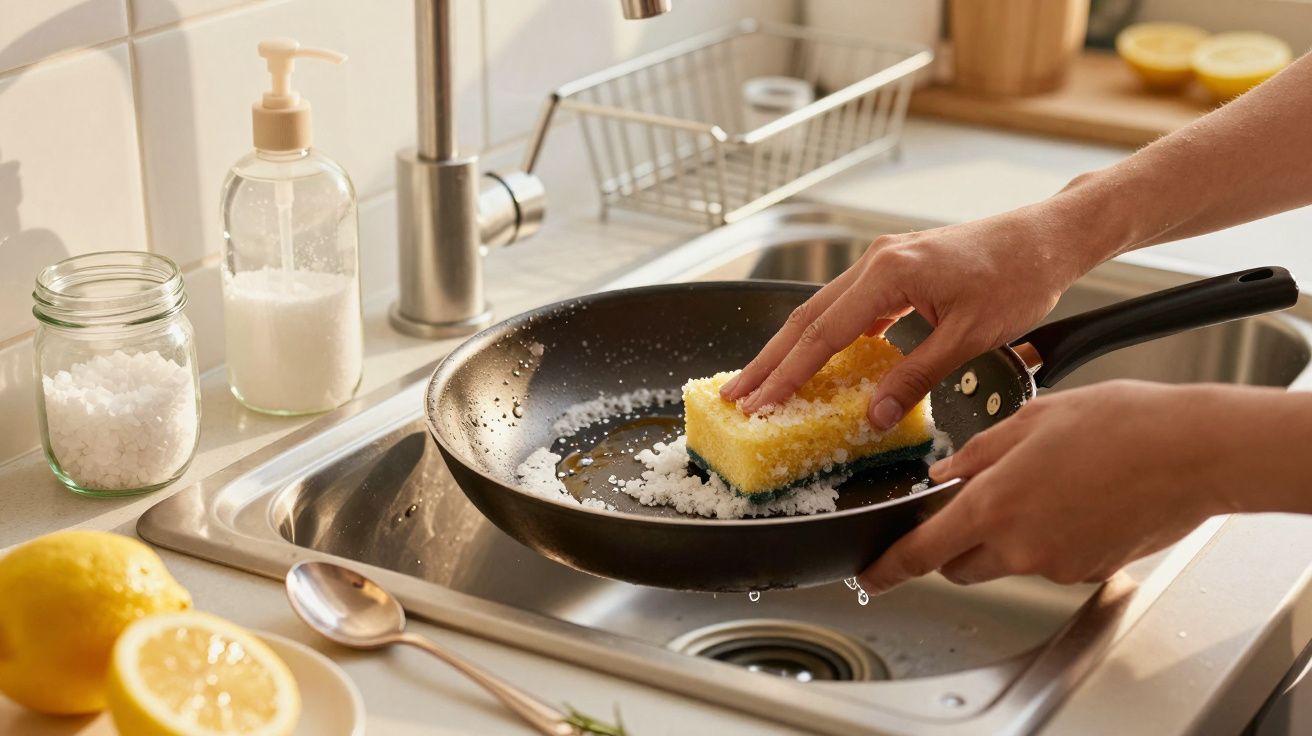
Greasy pans, cloudy glasses, stubborn stains: some kitchen messes seem to survive every cleaning product on the shelf.
More and more home cooks are turning to basic ingredients instead of buying new detergents every season. One simple combo keeps showing up in viral tips and old-school grandma wisdom: regular table salt mixed with dish soap. Behind the trend, there’s real chemistry-and it can genuinely change how a sink full of dirty dishes looks, smells, and feels.
Why salt and dish soap make such a powerful duo
Salt and dish soap work on two different fronts. One acts like a gentle scrub and mild disinfectant. The other cuts through grease and sticky residue. Together, they form a paste that tackles grime mechanically and chemically at the same time.
Salt boosts the scrubbing power of dish soap without scratching most everyday cookware, while also helping to disinfect surfaces.
Table salt has a crystalline structure that gives it mild abrasive power. The grains are hard enough to break down dried sauce, burnt-on bits, and tea stains. At the same time, salt binds water and can slow bacterial growth, supporting basic hygiene on cutting boards, sinks, and countertops.
Dish soap brings the surfactants. These molecules attach to grease on one side and water on the other, breaking fat into tiny droplets that rinse away easily. That’s why a small amount of detergent can dissolve a thick ring of oil in a pan or on a roasting sheet.
When you combine the two, the salt grains help lift off the top layer of grime while the soap loosens what’s stuck underneath. You get a slightly gritty, foamy cleaner that feels far more “grippy” on dirt than dish soap alone.
Kitchen messes where the mix works best
The salt-and-dish-soap trick tends to shine when basic soaking no longer helps. Common problem areas include:
- Burnt patches on the bottom of stainless steel pans
- Brown rings in tea mugs or coffee cups
- Sticky baking sheets coated in caramelized sauce
- Cutting boards stained by beets, tomato, or curry
- Glass containers that smell like garlic or onion
For delicate nonstick surfaces, use extra care, since abrasion can damage coatings. A finer salt and a soft sponge reduce the risk, but many manufacturers recommend avoiding abrasives entirely.
How to use the salt–dish soap mixture step by step
There are two main ways to use this mix: as a fresh spot treatment, or by adding salt directly to your dish soap bottle.
Method 1: Apply salt directly to the item
This method works well for occasional deep cleaning when you only need the trick for a few stubborn items.
| Step | Action |
|---|---|
| 1 | Rinse the pan, dish, or board with warm water to soften residue. |
| 2 | Sprinkle a thin, even layer of table salt over the dirty area. |
| 3 | Squeeze dish soap directly on top of the salt. |
| 4 | Spread the mixture with a sponge to form a paste. |
| 5 | Let it sit for 5–10 minutes so the soap can work on grease. |
| 6 | Scrub with a soft brush or sponge, then rinse thoroughly with hot water. |
That short resting time lets the soap loosen grease while the salt grains stay in place. This combination often removes marks that resisted previous attempts.
Letting the salted soap sit briefly on the surface usually matters more than scrubbing harder.
Method 2: Add salt to your dish soap bottle
If you want the effect every time you wash dishes, you can boost your entire bottle of detergent with a small amount of salt.
For a standard-size bottle, a common kitchen measure is:
- 1 teaspoon of table salt for an average 500 mL bottle of dish soap
Use a funnel (or a simple paper cone), pour the salt in slowly, close the bottle, and shake until the grains dissolve. You shouldn’t see a thick layer of salt at the bottom. If you do, you added too much and risk clogging the pump or leaving streaks on glassware.
The goal is a small cleaning boost, not salty brine. If the soap feels gritty or overly thick, dilute it with a little water, shake again, and use less salt next time.
Beyond the sink: other smart uses for kitchen salt
Helping your washing machine stay cleaner
Salt can also help with basic appliance care. Mixed with hot water or used alongside a descaling cycle, it may help fight limescale and slow mold growth in washing machines. The grains can help scrub away slimy buildup in the door gasket and detergent drawer.
A simple routine many households use includes:
- Running an empty hot wash with a cup of salt in the drum every few months
- Wiping the rubber door seal with a cloth dipped in warm salt water
- Leaving the door open so moisture can evaporate
This doesn’t replace commercial descalers in very hard-water areas, but it can reduce odors and slow buildup between deep-clean cycles.
Tackling rust and dull metal
Older knives, baking racks, or metal utensils often develop small rust spots or lose their shine. Salt, combined with acidic ingredients, can help here too.
A paste made from salt, warm water, and a splash of vinegar can loosen light surface rust on everyday kitchen tools.
Cover the rusty area with the paste, let it sit for 15–20 minutes, then scrub gently with a soft brush or sponge. For tougher spots, a second round may be needed. Dry the item right away to prevent new rust from forming.
When the salt trick may not be a good idea
Not every surface handles abrasives well, even mild ones. Some coatings, finishes, and materials react badly to repeated gritty scrubbing.
Use extra caution-or skip the salt mix entirely-on:
- Nonstick pans with a delicate or already-scratched coating
- Polished marble or natural-stone countertops
- Soft plastics that scratch easily
- Cast-iron pans with a carefully built seasoning layer
For these, a longer soak in hot, soapy water and a very soft sponge is safer. Always test any new method on a small, hidden area first, especially with expensive cookware.
Why this low-tech tip resonates in 2025 kitchens
The return of plain salt as a cleaning aid reflects broader shifts in how people manage their homes. Many want to cut back on harsh chemicals, reduce plastic-packaged products, and save money. A container of table salt is inexpensive and already in almost every kitchen.
At the same time, households face rising energy bills and tighter schedules. Tricks that reduce scrubbing time or rescue a burnt pan can make a real difference in day-to-day stress. A small change in how you use dish soap can mean fewer items tossed out or replaced in a rush.
There’s also a psychological side. Using a familiar, simple ingredient can make cleaning feel more hands-on and less industrial. People mix a small solution, watch it work on one pan, and then gradually adopt it as part of regular upkeep.
Extra tips to boost your kitchen cleaning routine
The salt-and-dish-soap mix works even better when paired with a few basic habits. Let pans cool before washing so sudden temperature changes don’t warp them. Add warm water and a drop of soap right after cooking to keep leftovers from hardening into a crust. Keep a separate soft brush for detailed items like graters or strainers, where salted foam can get into tiny holes.
If you like measuring results, try a simple before-and-after test on one problem item. Time how long you scrub with regular dish soap, then try the salt mix next time on a similar mess. Most people notice less scrubbing and a slightly brighter finish, especially on stainless steel. Over a few weeks, that small difference can quietly change how you feel about cleaning up after big meals.




Comments
No comments yet. Be the first to comment!
Leave a Comment